
Café Tiergarten, Berlin
Sten Samuelson & Fritz Jaenecke (Schwedenhaus)
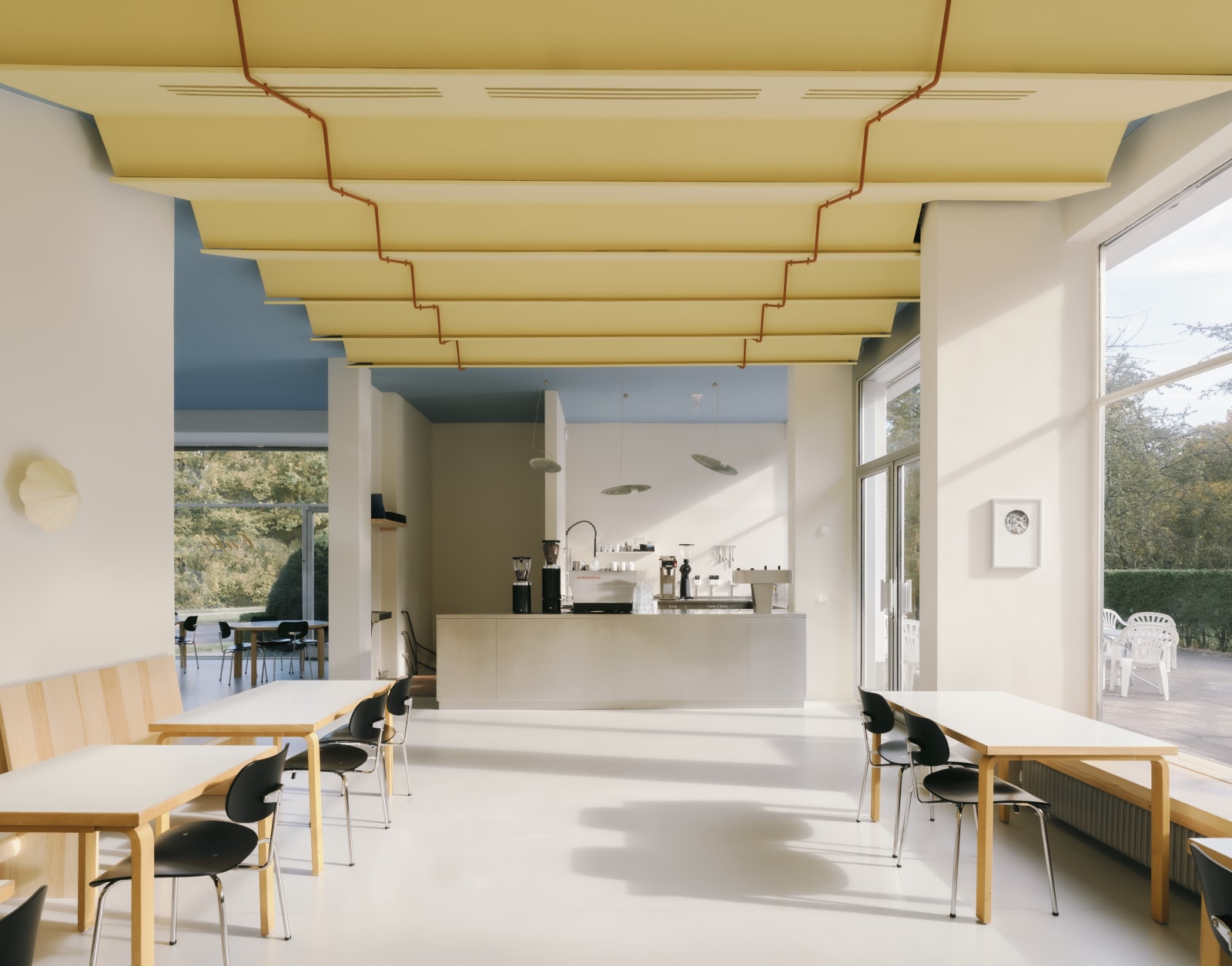
Following its careful listed building renovation, “Café Tiergarten“ in Berlin's Hansaviertel district is once again a place for neighbors to meet and for cultural exchange. Located on the ground floor of the so-called Schwedenhaus, visitors can now enjoy coffee and cake in the heart of the Tiergarten park. Where the original fittings from the 1950s could not be preserved, the new design by Foster + Partners was installed.
Address/Directions
Café TiergartenAltonaer Str. 3
10557 Berlin Directions
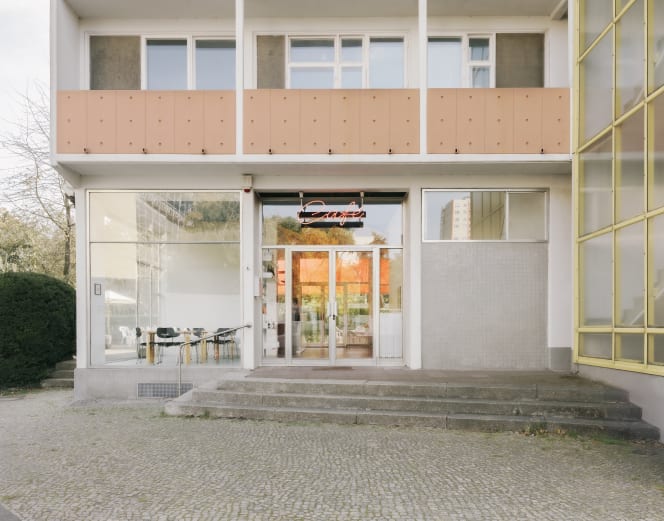
The Café Tiergarten is located on the ground floor of the Schwedenhaus building designed by Sten Samuelson & Fritz Jaenecke and, together with the Niemeyer House, forms the architectural gateway to the Hansaviertel district. Built in 1957 as part of the “Internationale Bauausstellung“, the bright and modern development of the Hansaviertel district was intended to give post-war Berlin a new face. Renowned architects such as Alvar Aalto, Egon Eiermann, Walter Gropius, Arne Jacobsen, and Oscar Niemeyer designed a lively, modern neighborhood in the middle of the Tiergarten, characterized by optimistic ideas for contemporary urban living.
From 1957 onwards, the café’s premises were used by the Berlin-based Wittler bakery, the largest bread producer in Europe in the 1920s. In the 1980s, the Wittler bakery closed down. As “Café Tiergarten,” the shop premises of the Schwedenhaus were then lovingly run as a coffee house for decades, much to the delight of long-standing regulars.
But this era also came to an end and the “Café Tiergarten” had to close until Leonie Herweg, Simon Freund, and Nicolas Mertens became aware of the vacancy. All three live in Hansaviertel. Leonie Herweg has been running GROTTO since 2023, a space for art and culture, in the shopping area around the northern subway entrance of Hansaplatz designed by Ernst Zinsser and Hans Rudolf Plarre.
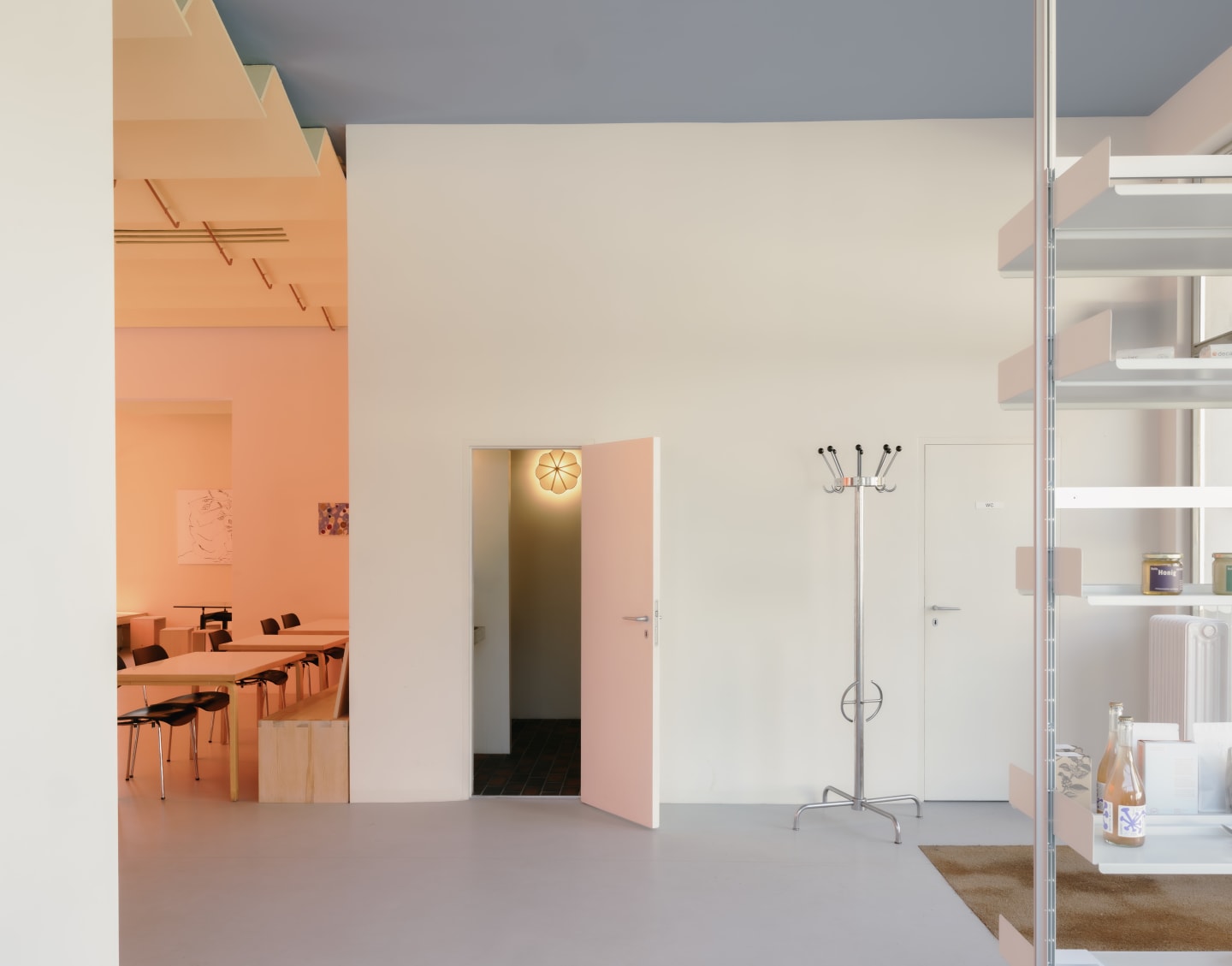
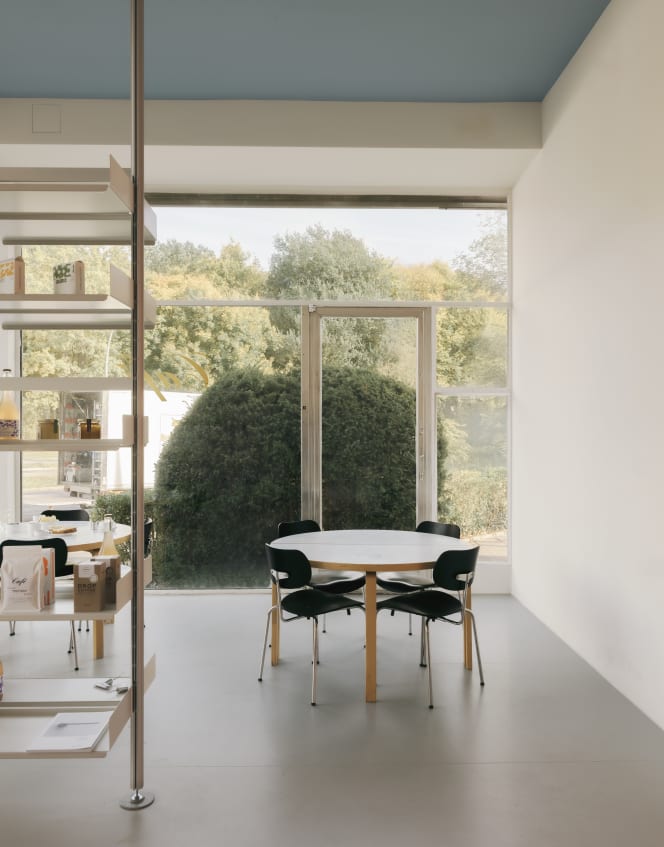
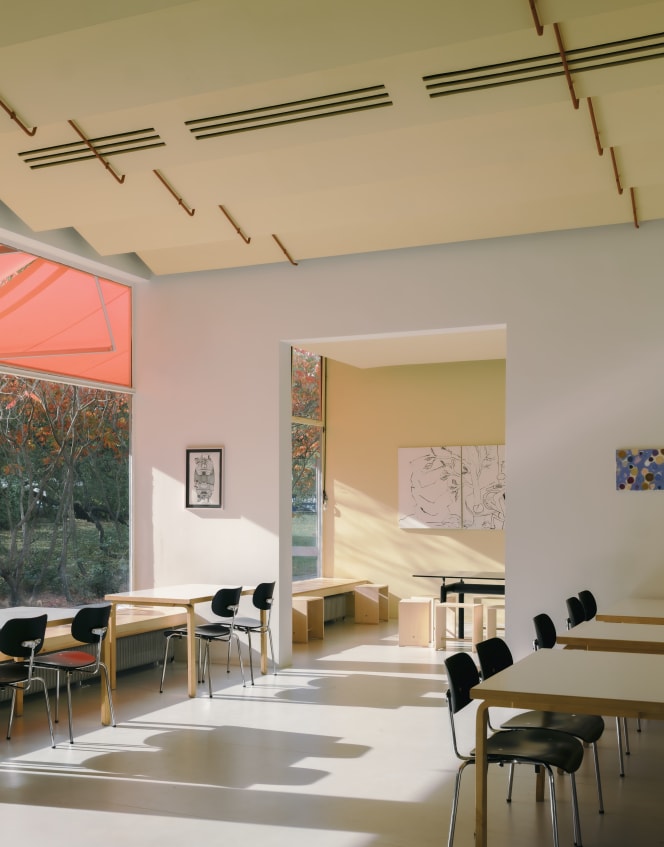
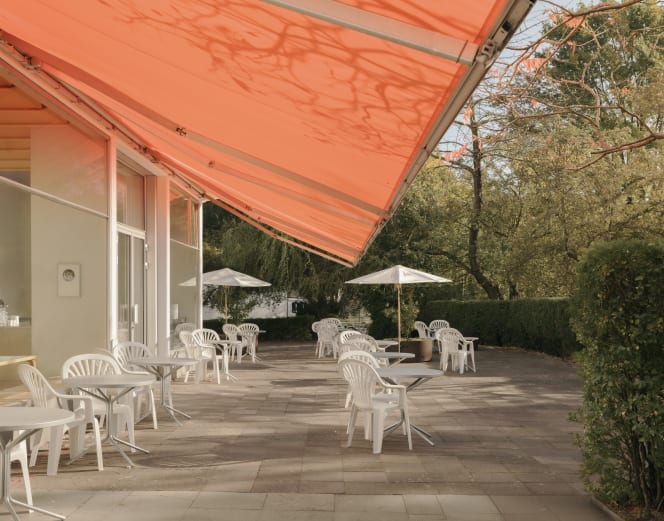
They wanted to bring the place back to life—open, inviting, with a sense of quality and history. Just under a year after renovation work began, “Café Tiergarten“ reopened its doors to residents of and visitors to the Hansaviertel district. Leonie Herweg describes the renovation, which was carried out in accordance with historic preservation guidelines, as a “huge adventure” to which they devoted themselves with a somewhat “romantic naivety.” After all, the property was in a desolate state. The electrical system dated back to 1957, the ceilings in the bathroom had been suspended seven times, and the view of the Tiergarten was obstructed. A restorer was commissioned by the owner in 2023 in advance. Through her analysis, the original wall colors were determined in what was virtually surgical work, and these colors now define the rooms once again. The marquee on the terrace too affects the colors of the space. It was only with the second delivery that it matched the orange tone of its predecessor and thus the requirements of the historic preservation authorities. The café’s terrace, to the back of the Schwedenhaus, streches into Tiergarten, but inside too, one is surrounded by trees, since the café has glass windows floor to ceiling, facing both north and south. To the north, one can see Egon Eiermann's apartment building at Bartningallee 2–4, and to the west, Alvar Aalto's building at Klopstockstraße 30–32. The new “Café Tiergarten” is furnished by these very contemporaries – with chairs by Eiermann, tables by Aalto, the Corbusier LC6 table etc.
The “Ulmer Hocker“, designed by Max Bill at Hochschule für Gestaltung Ulm, is featured. Carpenter Hannah Rotthaus from Studio Roh based her benches, which were built specifically for “Café Tiergarten“, on the principle of this classic design. The lamps stem from the neighboring Königliche Porzellan-Manufaktur or from designer Nick Poe.
The reddish-brown tiles in the kitchen and bathroom are produced by the British manufacturer Ketley Brick. They were used in London's Barbican and are reminiscent of the clinker bricks of the neighboring Hansabibliothek by Werner Düttmann or the tiled façade design in the primary colors red, blue, and yellow of the residential building at Bartningallee 7 by the Dutch architects van den Broek and Bakema.
Works of art by Berlin painter Galli, Gritli Faulhaber, Jack O'Brien, Catherine MacTavish, as well as invitation cards by Marcel Broodthaers, Marcel Duchamp, and Thomas Schütte adorn the walls of “Café Tiergarten.“
Visitors and neighbors are once again invited to enjoy coffee and cake, a late breakfast or early aperitif, as well as readings and bingo nights, as part of a varied cultural program.
Where the original fittings from the 1950s could not be preserved, both the short FSB 1291 door handle and the long FSB 1292 from the Foster + Partners product collection have been installed in the new surface Aluminum Pure.
© Simon Menges and Nino Tugushi
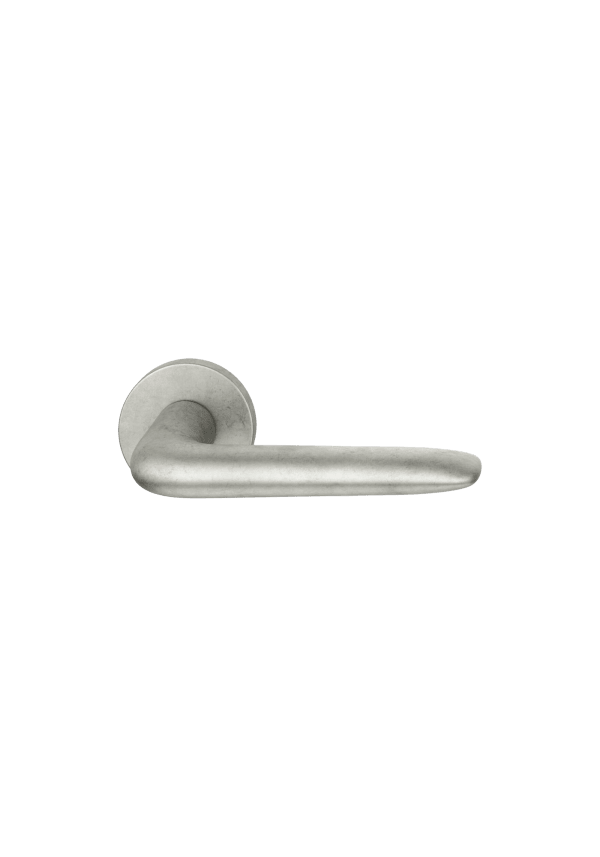
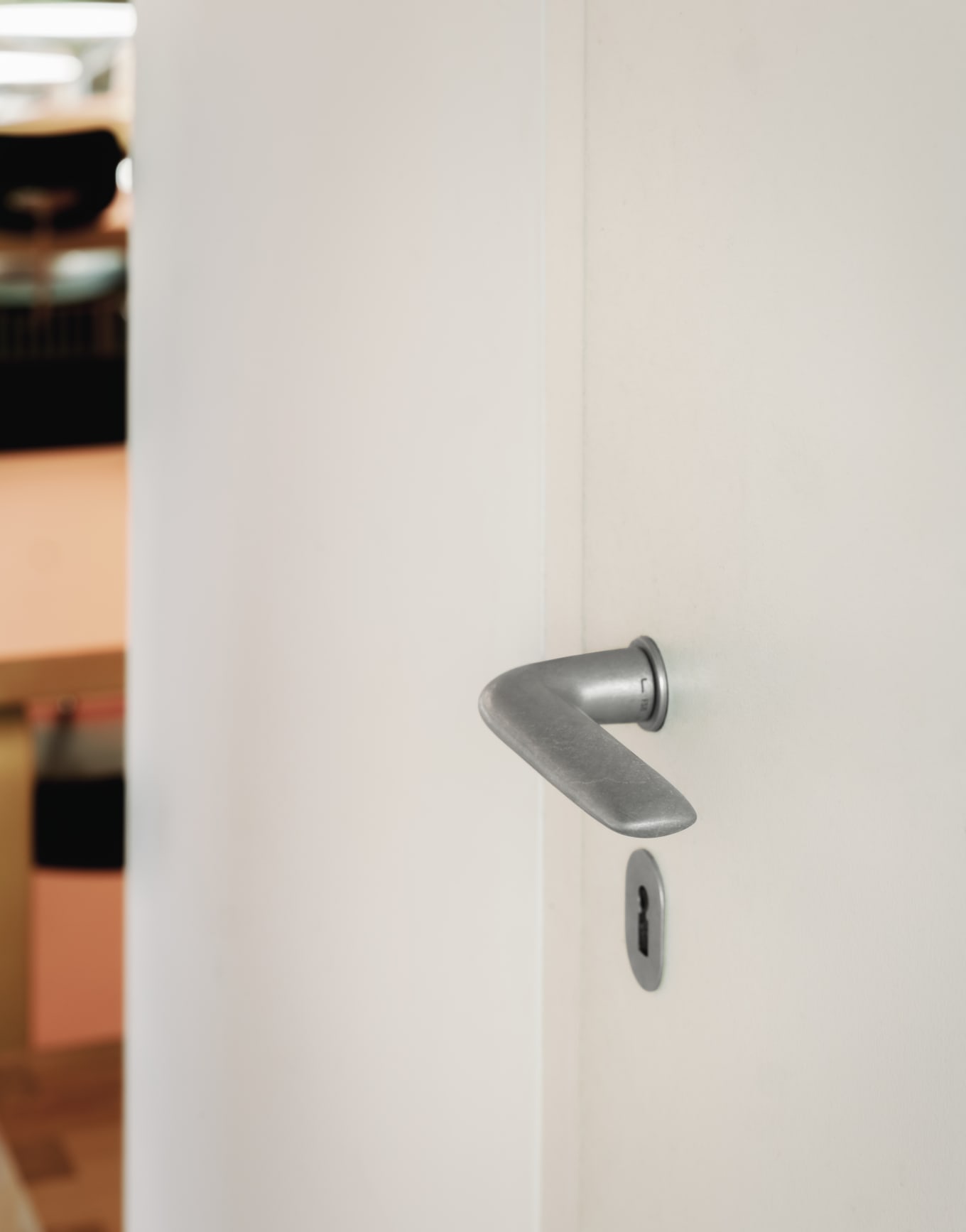
“The new materiality of the door handles, Aluminum Pure, is very similar to the original handles from the 1950s. This reflects our general approach to the project. We're not interested in a nostalgic gesture, where everything remains as it was, but rather in a realistic, unromanticized view.”
Interested in FSB 1292 for your next project?
We're here to help!

Bill Wieland
President FSB North America
bwieland@fsbna.com +1 203-404-4701

Newsletter
Our FSB Newsletter formats keep you informed about product innovations and current topics.